India has a large pharmaceutical manufacturing ecosystem that produces medicines for the domestic market as well as international markets. Pharmaceutical manufacturing companies work across different areas, including finished formulations, active pharmaceutical ingredients, sterile products, oral medicines, topical products and other healthcare formulations.
However, pharmaceutical manufacturing is much more than simply producing a medicine and packing it.
A pharmaceutical manufacturing process involves raw materials, production procedures, equipment, quality control, documentation, packaging, storage and regulatory requirements. The exact requirements depend on the type of medicine, dosage form and applicable regulations.
For businesses looking for a pharmaceutical manufacturing company in India, understanding these processes can help them ask better questions and evaluate potential manufacturing partners.
In this guide, we will explain how pharmaceutical manufacturing works, what quality systems are important, the major dosage forms manufactured in India, and what businesses should check before selecting a pharmaceutical manufacturer.
What Is Pharmaceutical Manufacturing?
Pharmaceutical manufacturing is the controlled process of converting approved raw materials and other inputs into finished pharmaceutical products.
The manufacturing process can involve several stages, such as:
- Raw material procurement
- Material testing
- Weighing and dispensing
- Formulation and processing
- In-process quality checks
- Finished-product testing
- Packaging
- Labelling
- Batch documentation
- Storage and distribution
The actual process varies depending on the pharmaceutical product.
For example, manufacturing a tablet is different from manufacturing a syrup, cream, eye drop or sterile injection.
This is why a pharmaceutical manufacturer should be evaluated according to the specific product and dosage form that a business intends to manufacture.
Pharmaceutical Manufacturing in India
India has developed a significant pharmaceutical manufacturing base supporting both domestic healthcare and global markets.
The Indian pharmaceutical ecosystem includes:
- Formulation manufacturers
- API manufacturers
- Contract manufacturers
- Third-party manufacturers
- Generic medicine manufacturers
- Specialty pharmaceutical manufacturers
- Vaccine manufacturers
- Biopharmaceutical companies
- Pharmaceutical exporters
The country also has a large network of pharmaceutical manufacturing facilities.
The regulatory environment includes requirements under India’s Drugs and Cosmetics framework. The Central Drugs Standard Control Organization (CDSCO) publishes regulatory notifications and guidance related to pharmaceutical manufacturing and quality requirements.
How Does Pharmaceutical Manufacturing Work?
Although manufacturing processes differ by product, a typical pharmaceutical production cycle can be understood through several stages.
1. Raw Material Procurement
Manufacturing begins with sourcing the required active ingredients, excipients, packaging materials and other inputs.
The materials must meet the specifications applicable to the product.
The quality of incoming materials is important because variations in raw materials can affect the manufacturing process and finished product.
2. Material Testing and Approval
Before materials enter production, applicable checks and testing are performed according to the manufacturer’s quality procedures.
Depending on the material, this may involve reviewing:
- Identity
- Purity
- Strength
- Physical characteristics
- Microbiological requirements where applicable
- Supplier documentation
Materials are handled according to established procedures before being released for production.
3. Dispensing and Weighing
The required materials are measured according to the approved manufacturing formula.
Accurate weighing and identification are important because the quantities of ingredients affect the composition of the final product.
Manufacturing documentation helps record the materials used during a batch.
4. Manufacturing and Processing
The materials then go through the process appropriate for the dosage form.
For example:
Tablets:
Blending → granulation where applicable → drying → compression → coating where applicable → testing → packing
Syrups:
Preparation of vehicle → addition and mixing of ingredients → filtration where applicable → filling → testing → packaging
Creams and ointments:
Preparation of phases → mixing/homogenisation → filling → testing → packaging
Injections:
Preparation of formulation → applicable filtration/sterilisation processes → filling → inspection → packaging
These are simplified examples. Actual procedures depend on the formulation, manufacturing process and applicable requirements.
What Is GMP in Pharmaceutical Manufacturing?
GMP stands for Good Manufacturing Practices.
GMP is designed to help ensure that pharmaceutical products are consistently produced and controlled according to appropriate quality standards.
In India, pharmaceutical manufacturing requirements include Schedule M under the Drugs Rules. CDSCO’s current materials reference the revised Schedule M and implementation requirements.
GMP covers more than final product testing.
It can involve:
- Premises
- Equipment
- Personnel
- Sanitation
- Documentation
- Production
- Quality control
- Storage
- Distribution
- Complaints
- Product recalls
- Self-inspection
CDSCO’s Schedule M material specifically includes areas such as documentation, production, quality control, distribution, complaints and product recalls.
This is important because pharmaceutical quality should be built into the manufacturing process rather than relying only on testing the finished product.
Why Quality Control Matters in Pharmaceutical Manufacturing
Quality control helps determine whether materials and finished products meet their relevant specifications.
Depending on the product, quality control activities may include testing of:
- Raw materials
- Packaging materials
- In-process samples
- Finished products
- Microbiological parameters where applicable
- Stability samples
The specific tests depend on the pharmaceutical formulation and its approved specifications.
A pharmaceutical manufacturer should therefore have appropriate quality systems and testing procedures for the products it manufactures.
Quality Assurance vs Quality Control
These two terms are often confused.
Quality Assurance
Quality assurance focuses on the overall system used to maintain consistent pharmaceutical manufacturing and quality.
It can include:
- Standard operating procedures
- Documentation systems
- Training
- Audits
- Process controls
- Deviation management
- Corrective and preventive actions
- Change control
Quality Control
Quality control focuses more directly on sampling, testing and evaluating materials and products against specifications.
In simple terms:
Quality Assurance = systems and processes
Quality Control = testing and evaluation
Both are important parts of pharmaceutical manufacturing.
Pharmaceutical Manufacturing Facilities
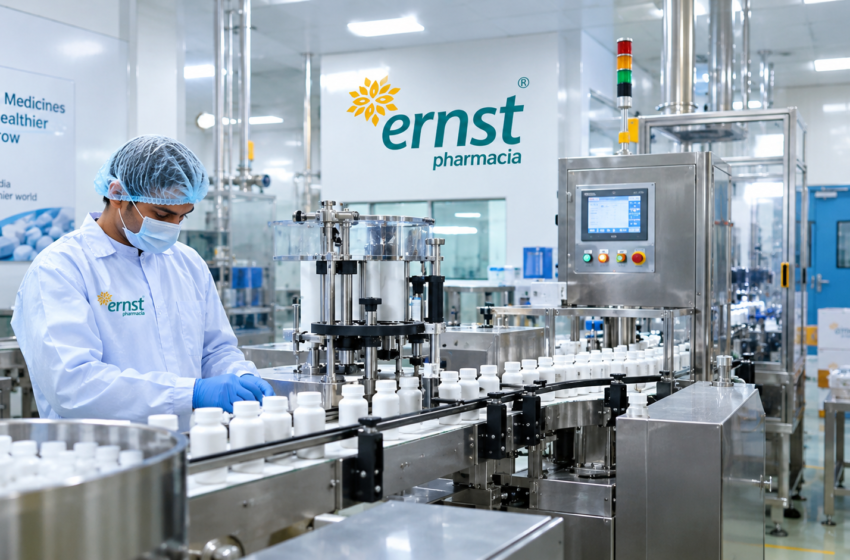
A pharmaceutical manufacturing facility is designed around the products and processes being manufactured.
Different areas may be required for:
- Raw material storage
- Dispensing
- Production
- Packaging
- Quality control
- Finished-product storage
- Personnel movement
- Material movement
- Cleaning and sanitation
The design and controls depend on the products manufactured at the facility.
For example, sterile pharmaceutical manufacturing requires controls that are different from those used for many non-sterile solid dosage forms.
CDSCO also maintains information on WHO-GMP-certified manufacturing units for Certificates of Pharmaceutical Products, showing that manufacturing certification and facility status are relevant areas for regulatory review.
Major Pharmaceutical Dosage Forms Manufactured in India
Pharmaceutical manufacturing companies may manufacture different dosage forms depending on their facilities, licences, equipment and product approvals.
Tablets
Tablets are solid dosage forms commonly manufactured through processes such as blending, granulation where required, compression and coating.
Examples can include:
- Immediate-release tablets
- Sustained-release tablets
- Modified-release tablets
- Chewable tablets
Capsules
Capsules contain pharmaceutical formulations inside a capsule shell.
Manufacturing may involve:
- Powder or granule preparation
- Filling
- Weight checks
- Inspection
- Packaging
Syrups
Syrups are liquid pharmaceutical formulations.
Manufacturing can involve:
- Preparing the liquid base
- Dissolving or dispersing ingredients
- Mixing
- Filtration where applicable
- Filling
- Packaging
Oral Suspensions
Oral suspensions contain particles dispersed throughout a liquid.
Manufacturing requires appropriate mixing and controls to help maintain the intended formulation characteristics.
Creams and Ointments
These are semisolid formulations commonly used for topical applications.
Their manufacturing can involve mixing different phases and achieving the required consistency and uniformity.
Injections
Injectable products require specialised manufacturing controls because they are intended for administration by injection.
Sterile manufacturing has specific requirements, including controls related to contamination and process conditions.
Eye Drops
Ophthalmic products have specific quality requirements because they are intended for application to the eye.
Manufacturing controls depend on the formulation and whether the product requires sterile processing.
What Is Third-Party Pharmaceutical Manufacturing?
Third-party pharmaceutical manufacturing is a business arrangement where one pharmaceutical company engages another manufacturing organisation to produce products.
The business purchasing the manufacturing service may market the products under its own brand, depending on the agreement and applicable regulatory requirements.
Third-party manufacturing can be useful for businesses that want to develop a pharmaceutical product portfolio without establishing every part of their own manufacturing infrastructure.
A third-party arrangement may involve:
- Product selection
- Formulation requirements
- Manufacturing
- Packaging
- Labelling
- Quality documentation
- Production planning
- Batch quantities
- Dispatch
- Regulatory responsibilities
The responsibilities of each party should be clearly documented before production begins.
What Should You Check Before Choosing a Pharmaceutical Manufacturer?
Choosing a pharmaceutical manufacturing company requires proper due diligence.
Here are some important factors to review.
1. Manufacturing Licence
Check the applicable manufacturing licence and whether it covers the products and dosage forms you require.
Do not assume that a company manufacturing one type of product is automatically authorised to manufacture every type of pharmaceutical formulation.
2. Manufacturing Facility
Understand where your products will actually be manufactured.
Ask for:
- Facility name
- Location
- Applicable manufacturing permissions
- Product categories
- Relevant certifications
3. Quality Documentation
Ask for appropriate documentation related to the proposed products and manufacturing arrangement.
Where a company claims a certification such as WHO-GMP, verify the certificate and its scope.
CDSCO maintains published information concerning WHO-GMP-certified manufacturing units, which can be useful when verifying relevant claims.
4. Product Development Capability
If you are launching a new pharmaceutical product, understand whether the manufacturer can support:
- Formulation development
- Product specifications
- Packaging development
- Stability-related requirements
- Documentation
The exact services available will depend on the manufacturer.
5. Minimum Order Quantity
Minimum order quantities can vary depending on:
- Product
- Dosage form
- Packaging
- Batch size
- Manufacturing requirements
- Commercial arrangement
Always confirm MOQ before finalising the agreement.
6. Manufacturing Timeline
Ask whether the product is:
- Already available
- Manufactured after order confirmation
- A new formulation requiring development
These situations can have very different timelines.
7. Packaging and Labelling
Discuss:
- Pack size
- Packaging material
- Label requirements
- Artwork
- Batch information
- Regulatory information
All product labelling should follow the applicable requirements.
8. Supply and Dispatch
A manufacturing partner should be able to clearly communicate:
- Production status
- Batch completion
- Dispatch schedule
- Shipping arrangements
- Documentation
Clear communication can reduce avoidable delays.
How to Evaluate Pharmaceutical Manufacturing Companies in India
A useful evaluation framework is to compare manufacturers across several areas.
| Factor | What to Check |
|---|---|
| Manufacturing licence | Whether the relevant products are covered |
| Facility | Location, equipment and manufacturing scope |
| Quality | QA/QC systems and applicable standards |
| Certification | Certificate, issuing authority and scope |
| Product portfolio | Relevant therapeutic categories |
| Dosage forms | Tablets, capsules, injections, liquids etc. |
| MOQ | Minimum production or order requirement |
| Timeline | Development and production lead time |
| Packaging | Available formats and requirements |
| Documentation | Product and manufacturing documents |
| Supply | Dispatch and logistics arrangements |
| Commercial terms | Pricing, payment and contractual conditions |
This approach provides a more practical way to compare pharmaceutical manufacturers than relying only on a generic “top pharma companies” list.
Pharmaceutical Manufacturing at Ernst Pharmacia
Ernst Pharmacia operates in India’s pharmaceutical sector and lists third-party manufacturing among its business services.
Its official website also presents a broad pharmaceutical product portfolio covering categories such as cardiology, antibiotics and antivirals, dermatology, gynaecology, neurology, respiratory care, oncology, orthopedics, gastroenterology and nutraceuticals.
The company states that its products are manufactured in WHO-GMP-certified facilities and highlights quality and compliance as part of its manufacturing approach. These claims should be verified against the specific manufacturing facility, certificate and product scope when evaluating a particular manufacturing arrangement.
Ernst Pharmacia website also provides a dedicated contact route for third-party contract manufacturing enquiries, indicating that businesses can contact the company regarding manufacturing requirements.
What Products Can a Pharmaceutical Manufacturer Produce?
The available products depend on the manufacturer’s capabilities and approvals.
Ernst Pharmacia’s current product catalogue includes multiple categories, including:
- Cardiology
- Antibiotics & Antivirals
- Dermatology
- Diabetology
- Gynaecology / Women’s Care
- Gastroenterology
- Neurology / Psychiatry
- Oncology
- Orthopedics
- Respiratory
- Nephrology / Urology
- Hepatology
- Ophthalmology
- Pediatrics
- Nutraceuticals
- Critical Care
- Infusion products
Its online catalogue also includes different dosage forms, including tablets, capsules, injections, syrups, drops and other formulations.
Businesses should check the current catalogue and confirm the manufacturing status and documentation of individual products before placing an order.
Questions to Ask a Pharmaceutical Manufacturing Company
Before signing a manufacturing agreement, ask these questions:
1. Which products can you manufacture?
Ask for the current product list and available dosage forms.
2. Where will the products be manufactured?
Confirm the manufacturing facility and relevant permissions.
3. What quality certifications are available?
Ask for certificates and verify their scope and validity.
4. What is the minimum order quantity?
Confirm MOQ for each product.
5. How long will manufacturing take?
Ask whether the product is in stock, ready for production or requires new development.
6. What packaging options are available?
Discuss bottle, blister, strip, tube, carton and other relevant packaging options.
7. What documentation will be provided?
Ask about product specifications, certificates of analysis and other applicable documentation.
8. Who manages regulatory responsibilities?
Clearly define responsibilities between the brand owner and manufacturer.
9. What are the payment terms?
Get commercial terms in writing before confirming production.
10. How will dispatch be managed?
Clarify dispatch timelines, logistics and documentation.
Why Pharmaceutical Manufacturing Quality Matters
The quality of a pharmaceutical product cannot be separated from the manufacturing process.
Good manufacturing practices are intended to control risks throughout production, including risks related to materials, premises, equipment, personnel, documentation and production procedures.
India’s regulatory framework continues to evolve. CDSCO published the revised Schedule M notification in December 2023 and subsequently issued communications concerning its implementation.
CDSCO also published a June 2026 circular concerning implementation of a pharmacovigilance system as required under Schedule M.
This shows why pharmaceutical manufacturers need to keep their quality and regulatory systems aligned with applicable requirements.
Pharmaceutical Manufacturing and the Future of the Industry
The pharmaceutical manufacturing sector is becoming increasingly focused on:
- Quality systems
- Regulatory compliance
- Manufacturing technology
- Supply-chain reliability
- Research and development
- Product innovation
- Data and documentation
- International standards
- Specialised formulations
For pharmaceutical businesses, choosing a manufacturing partner is therefore not only about production capacity.
It is also about whether the manufacturer can support the required quality, documentation, formulation, packaging and supply requirements.
Conclusion
Pharmaceutical manufacturing companies in India play an important role in producing medicines and healthcare products for domestic and international markets.
A pharmaceutical manufacturing process can involve multiple stages, from raw material testing and formulation to quality control, packaging and distribution. GMP and other applicable quality requirements help establish controls throughout this process.
For businesses searching for a pharmaceutical manufacturer, important factors include manufacturing licences, facility capabilities, quality documentation, certifications, product range, dosage forms, minimum order quantities, timelines, packaging and supply arrangements.
Ernst Pharmacia operates in the Indian pharmaceutical sector and offers a broad product portfolio along with third-party manufacturing services. Its website states that its products are manufactured through WHO-GMP-certified facilities and provides a dedicated route for third-party contract manufacturing enquiries.
Before entering into any manufacturing arrangement, businesses should verify the relevant facility, licences, certificates, product approvals and commercial terms for the specific products they intend to manufacture.
Frequently Asked Questions
What are pharmaceutical manufacturing companies in India?
Pharmaceutical manufacturing companies in India are organisations involved in producing medicines and pharmaceutical formulations. Depending on their facilities and approvals, they may manufacture tablets, capsules, syrups, injections, creams, eye drops and other dosage forms.
What does a pharmaceutical manufacturer do?
A pharmaceutical manufacturer converts approved raw materials into finished pharmaceutical products through controlled processes. Activities may include material testing, production, in-process checks, finished-product testing, packaging and documentation.
What is GMP in pharmaceutical manufacturing?
GMP, or Good Manufacturing Practice, is a system of controls and procedures intended to ensure pharmaceutical products are consistently produced and controlled according to applicable quality standards.
How do I choose a pharmaceutical manufacturing company in India?
Check the relevant manufacturing licence, facility, quality systems, certifications, product capabilities, dosage forms, MOQ, manufacturing timelines, documentation, packaging and commercial terms.
What is third-party pharmaceutical manufacturing?
Third-party pharmaceutical manufacturing is an arrangement in which one company engages another manufacturer to produce pharmaceutical products under agreed commercial, quality and regulatory conditions.
What dosage forms can pharmaceutical manufacturers produce?
Depending on their facilities and approvals, manufacturers may produce tablets, capsules, syrups, oral suspensions, injections, creams, ointments, eye drops, softgels and other formulations.
Does Ernst Pharmacia offer third-party manufacturing?
Yes. Ernst Pharmacia’s official website lists third-party manufacturing as one of its services and provides a dedicated contact route for third-party contract manufacturing enquiries.
Does Ernst Pharmacia work with different pharmaceutical product categories?
Yes. Its current product catalogue covers multiple categories, including cardiology, antibiotics and antivirals, dermatology, gynaecology, neurology, oncology, orthopedics, respiratory care, gastroenterology and nutraceuticals.
Are all pharmaceutical manufacturers the same?
No. Pharmaceutical manufacturers can differ in their facilities, dosage forms, manufacturing capabilities, certifications, product portfolios, order requirements and business models. A manufacturer should be evaluated according to the specific products and services required.
What documents should I check before pharmaceutical manufacturing?
Depending on the arrangement, relevant documents may include manufacturing licences, applicable certificates, product specifications, quality documentation and other regulatory or commercial documents. The exact documentation should be confirmed for the specific product and manufacturing arrangement.